
Strategist Coffee
We are an Indonesian Coffee Export Company. Our activities center in Malang, East Java, Indonesia. Strategist Coffee came to make the convenience of life better from the side of coffee buyers and farmers.We provide coffee products for the market abroad, in the form of coffee beans and roasted coffee beans. For the currently available varieties, only Arabica and Robusta varieties are grown on the island of Java.
What We Do
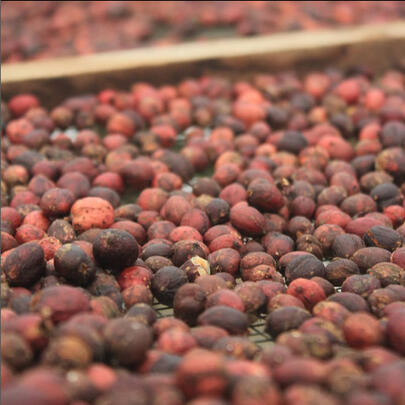
Strategist Coffee is here to help coffee farmers market their coffee products at stable prices and provide better profits to coffee farmers.On the other hand, strategist coffee wants coffee connoisseurs to get high-quality coffee at affordable prices.
OUR GALLERY


Strategist Coffee activity also traces the history of coffee and looks for quality coffee for us to serve to you. We visit local farmers to collect suitable commodities for us to export
OUR VISION
To be a trusted business coffee partner
To be the leader coffee market in East Java
To preserve the local coffee business in Indonesia
OUR VALUE
Integrity, Excellence Service, Excellence Product, Honest, Honor
To listen and keep growing
To be open-minded and keep learning
To preserve good traditional culture
To be Innovative
CONTACT US
owned by
PT Tiga Perkasa Solusindo
Malang, East Java, Indonesiaregistered at Indonesia Government
check @ https://ptp.ahu.go.id/profildownload our company profile in the download link below
LEGAL STANDING
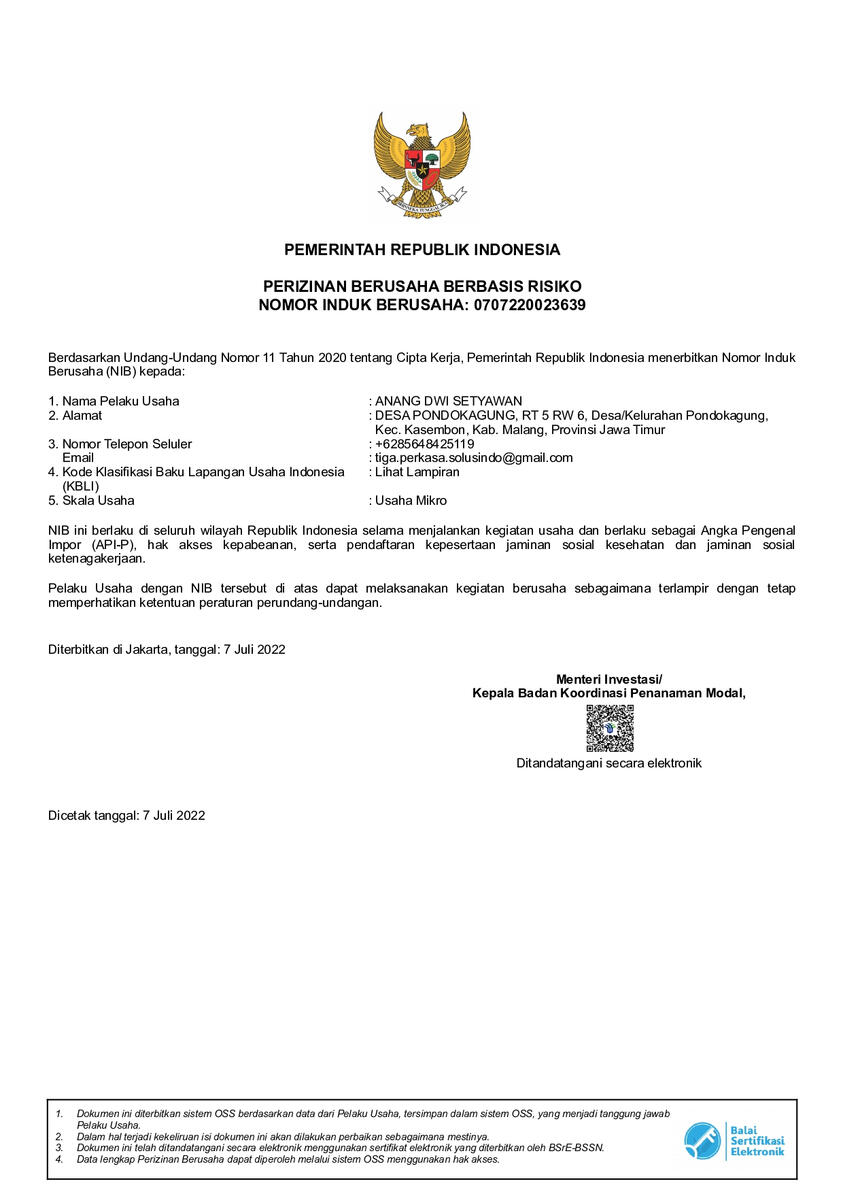
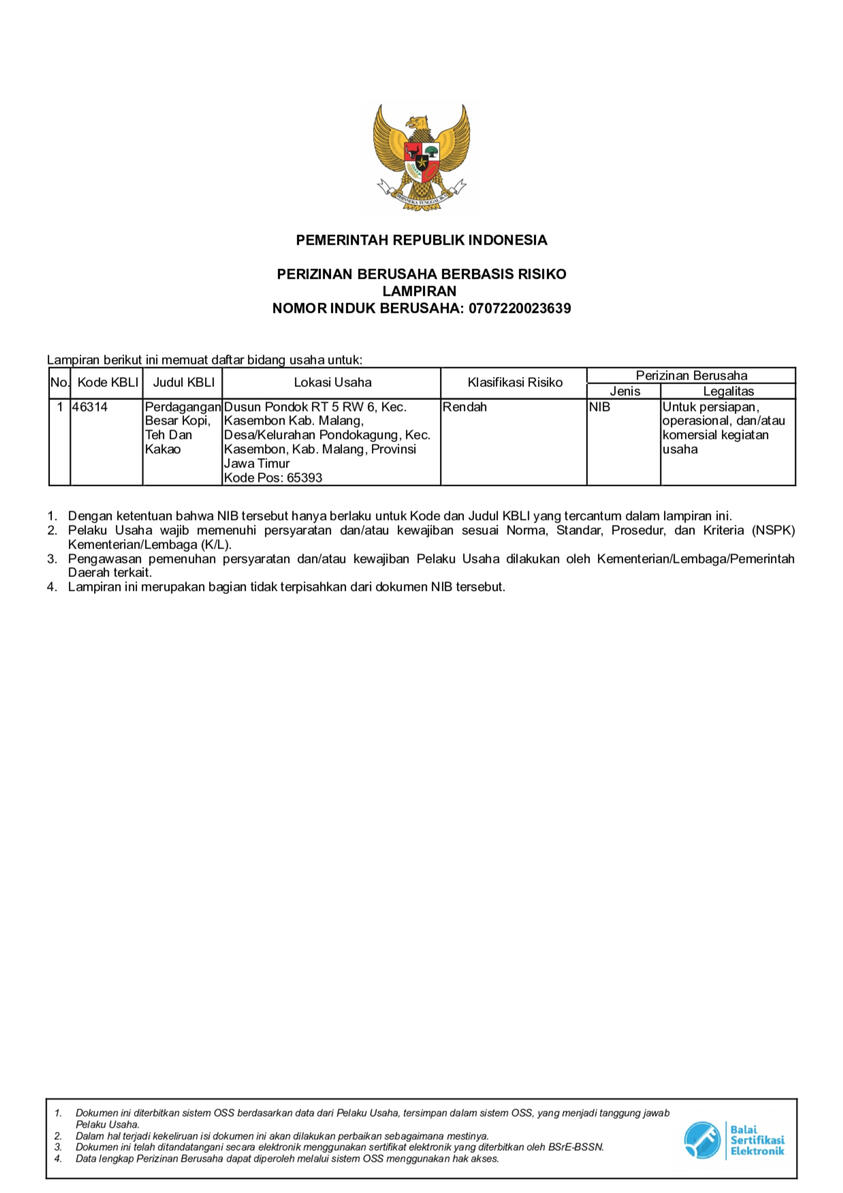
Our Company is registered with the Government of Republic Indonesia,
scroll down to see more
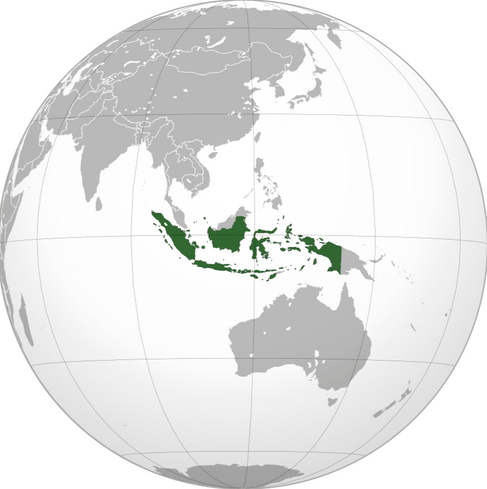
Indonesia (Indonesian pronunciation: [in.ˈdo.nɛ.sja]), with the official name of the Republic of Indonesia (RI), or in full the Unitary State of the Republic of Indonesia (NKRI), is an archipelagic country in Southeast Asia which is crossed by the equator and is located in between mainland Asia and Oceania, so that Indonesia is known as a transcontinental country, as well as between the Pacific Ocean and the Indian Ocean.
Indonesia is the 14th largest country as well as the largest archipelagic country in the world with an area of 1,904,569 km²,[8] and the country with the 6th largest island in the world, with 17,504 islands.[15] An alternative name commonly used to refer to the "Indonesian Archipelago" is called Nusantara.[16] In addition, Indonesia is also the 4th most populous country in the world with a population of 270,203,917 in 2020,[17] as well as the largest and largest Muslim country in the world, with more than 230 million adherents.[18][ 19] Indonesia is one of the multiracial, multiethnic, and multicultural countries in the world, just like the United States.[20]Indonesia is bordered by a number of neighboring countries in Southeast Asia, the Australian continent, and Oceania. Indonesia borders on land with Malaysia on the islands of Borneo and Sebatik, with Papua New Guinea on the island of Papua, and with Timor Leste on the island of Timor. Neighboring countries that only share maritime borders with Indonesia are Singapore, the Philippines, Australia, and the union territory of the Andaman and Nicobar Islands in India.Indonesia is a unitary state with a republican form of government based on the valid Indonesian Constitution, namely the 1945 Constitution of the Republic of Indonesia (UUD 1945).[21] Based on the 1945 Constitution, the People's Representative Council (DPR), Regional Representative Council (DPD), and the President are directly elected by the people.The current capital city of Indonesia is the Special Capital Region of Jakarta (DKI Jakarta). On January 18, 2022, the government established the Capital of the Archipelago on the island of Kalimantan, which occupies the North Penajam Paser area, to replace Jakarta as the new capital.[22] Until now, the process of transitioning the capital city is still in progress.Indonesia's history was heavily influenced by immigrant and colonial nations. The Indonesian archipelago has been an important trading area since the 7th century, namely since the establishment of Sriwijaya, a Hindu-Buddhist kingdom centered in Palembang. The Srivijaya Kingdom established religious and trade relations with the Chinese, Indians, and Arabs. Hindu-Buddhist religion and culture grew, developed, and assimilated in the Indonesian Archipelago in the early 4th century to the 13th century AD. After that, traders and scholars from the Arabian Peninsula brought the religion and culture of Islam around the 8th century to the 16th century. At the end of the 15th century, Europeans came to the Indonesian Archipelago and fought for a monopoly on the Moluccan spice trade during the Age of Discovery. After being under Dutch colonial rule for at least 300 years, Indonesia, then known as the Dutch East Indies, proclaimed its independence at the end of World War II, on August 17, 1945 to be exact. Furthermore, Indonesia faced various challenges and serious problems, ranging from natural disasters , massive corruption practices, social conflicts, separatist movements, democratization processes, and periods of development, socio-economic-political change and development, as well as rapid modernization.Indonesia consists of various ethnic groups, languages, and religions. Based on the family family, Indonesia consists of indigenous indigenous peoples namely Austronesian and Melanesian where the Austronesian people are the largest in number and mostly inhabit western Indonesia. With the Javanese and Sundanese forming the largest ethnic group with a population reaching 57% of the entire population of Indonesia.[23] Indonesia's national motto, "Bhinneka Tunggal Ika" (different but still one goal), means the socio-cultural diversity that forms a unified state. In addition to having a dense population and a large area, Indonesia has a nature that supports the 2nd largest level of biodiversity in the world.Indonesia is a member of the United Nations (UN) and the only member that has ever left the United Nations, namely on January 7, 1965, and rejoined on September 28, 1966. Indonesia has been a member of the Association of Southeast Asian Nations (ASEAN), the Asian-African Conference (KAA), the Asia Pacific Economic Cooperation (APEC), the Organization of Islamic Cooperation (ASEAN). OIC), the G-20, and will become a member of the Organization for Economic Cooperation and Development (OECD).
THE COFFEE
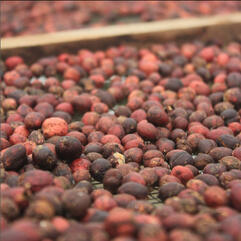
We provide the best coffee beans from our coffee farmers with natural processing. After the coffee fruits are picked from the tree, the coffee fruits will be re-sorted to select only mature coffee beans. The coffee fruits are then dried in the sun. After the coffee beans are dry, it will be followed by peeling the coffee skin and coffee husk to get the coffee beans.
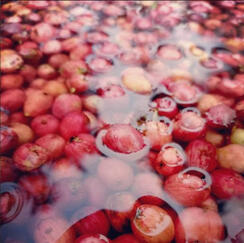
Coffee beans that are processed by the washing process will undergo the following processing. After the coffee cherries are picked from the tree, only the ripe coffee cherries will be re-selected. After that the coffee cherries will be peeled with a pulping machine, then the coffee beans will be washed with clean water. Then the coffee beans will be dried in the sun to dry in the sun while being protected and kept closed from free air.
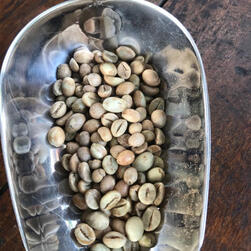
Our robusta coffee products are grown at an altitude of 300 - 450 meters above sea level on the slopes of Mount Kawi, East Java Province
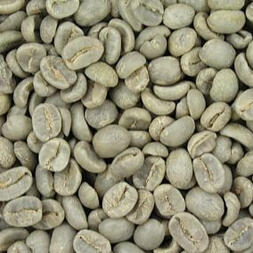
Our arabica coffee products are grown at an altitude of 1200 - 1300 meters above sea level maybe more, on the slopes of Mount Kawi, East Java Province.